Beyond Domes and Minarets: How Islam Has Shaped Architecture and Community
- Fayrose Iali
- Jul 13
- 5 min read

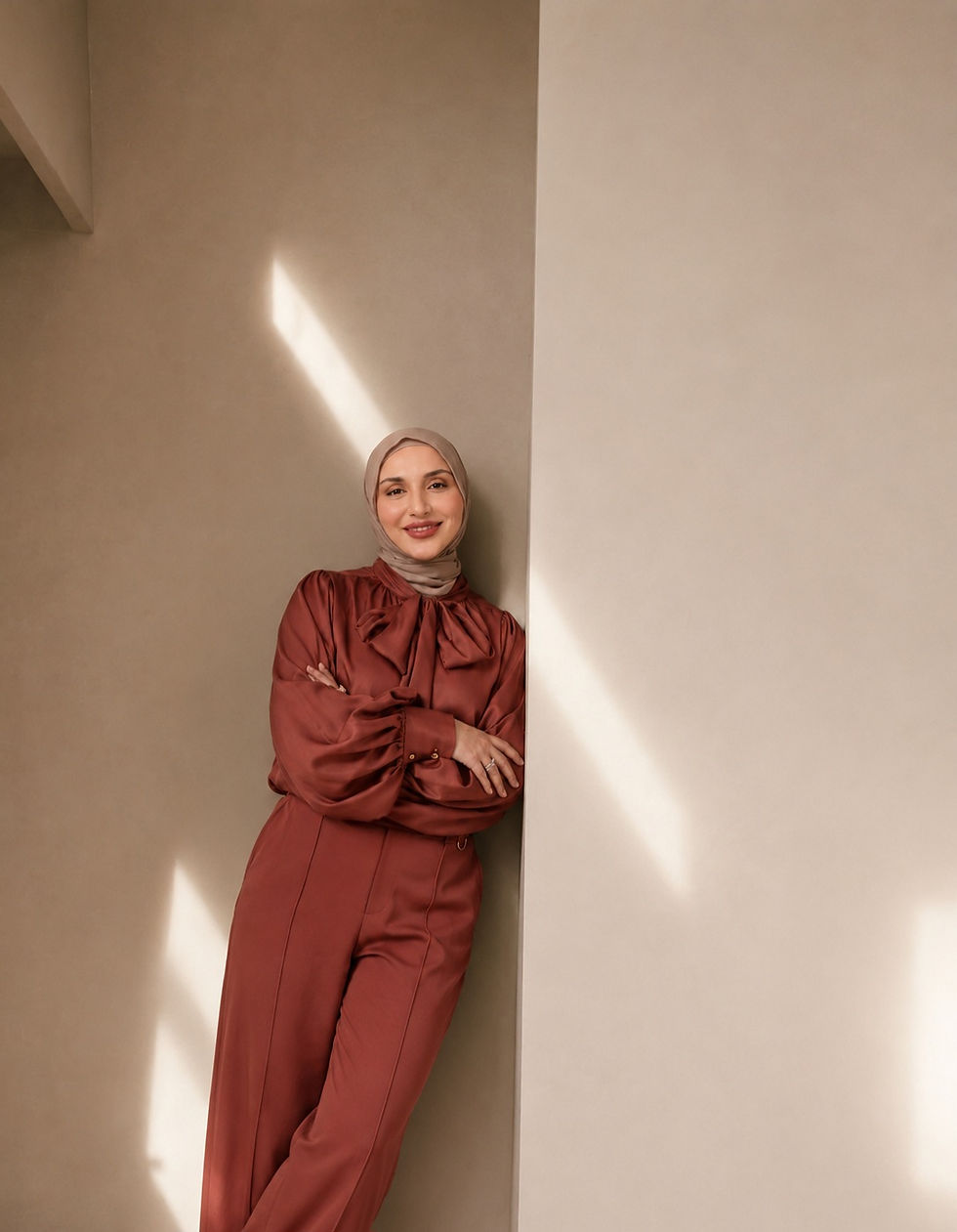
A Perspective from Muslim Designer - Fayrose Iali
When people hear the words Islamic architecture, many immediately picture grand mosques, soaring minarets and intricate geometric patterns. While these are undeniably beautiful, they tell only part of the story.
"As a proud Muslim designer, I believe Islam has shaped architecture in a far deeper way than aesthetics alone. My faith influences how I understand people, families, neighbourhoods, community and our responsibility towards the environment. It also inspires my ongoing pursuit of excellence, superior design aesthetics and thoughtful solutions that improve the way people experience the built environment."
At its heart, Islamic architecture is not simply about creating impressive buildings. It is about creating meaningful places that support dignity, well-being, connection and a better quality of life.
That philosophy is as relevant in multicultural Australia today as it was more than a thousand years ago.
Architecture Begins with People
One of the most beautiful principles within Islam is that every human being deserves dignity.
That simple belief can transform the way we approach design.
A home is more than four walls. It is where children grow, grandparents are honoured, guests are welcomed and memories are made. A workplace should inspire collaboration and wellbeing. Public spaces should encourage connection rather than isolation.
When architecture is designed around people instead of simply maximising floor area or profit, communities flourish.
These values are universal. They transcend religion, culture and nationality.
Privacy Without Isolation
One of the most misunderstood aspects of Islamic architecture is privacy.
Privacy is sometimes mistaken for separation or exclusion. In reality, thoughtful privacy creates comfort, security and respect.
Traditional Islamic homes carefully balanced private family spaces with generous and welcoming areas for guests. Internal courtyards allowed natural light, fresh air and greenery to enter the centre of the home while maintaining a sense of sanctuary.
Many Australians appreciate these same principles today: open living areas for entertaining, quiet retreats for family members and outdoor spaces that connect with nature while remaining protected from neighbouring properties.
Good design understands that people need places to gather, as well as places to retreat, reflect and simply breathe.
Beauty Has a Purpose
"Islam encourages excellence in everything we do. For me, that principle extends naturally to architecture and interior design."
Beauty is not merely decoration, nor should it be confused with unnecessary extravagance. Thoughtful design can uplift the human spirit, calm the mind and inspire gratitude.
Natural light, balanced proportions, quality craftsmanship, considered details and carefully selected materials all influence how people experience a space.
The goal is not always to create a building that demands attention. Sometimes, the most successful spaces are those that quietly enrich everyday life.
As designers, we have both the privilege and the responsibility to create environments that improve people’s wellbeing long after construction is complete.
Sustainability Is an Ancient Idea
Long before sustainability became an industry term, Muslim communities were designing in response to climate and place.
Buildings considered the movement of the sun, prevailing winds, local materials, shade and water conservation. Courtyards helped cool homes naturally. Shaded walkways protected pedestrians. Thick walls regulated internal temperatures, while screens filtered harsh sunlight and allowed air to circulate.
Rather than forcing nature to conform to architecture, architecture responded intelligently to nature.
Australia faces many environmental challenges, including extreme heat, drought, bushfires and increasing energy demands.
The answers do not always lie solely in new technology. They can also be found in timeless principles that encourage us to observe the environment, minimise waste and design carefully for local conditions.
This approach also resonates strongly with the knowledge and custodianship of Australia’s First Nations peoples, whose relationship with Country reminds us that the land is not simply a site to occupy, but something to understand, respect and protect.
Strong Communities Do Not Happen by Accident
One of Islam’s greatest contributions to architecture and urban design is its emphasis on community.
Historically, neighbourhoods were organised around shared places where people naturally encountered one another throughout daily life.
Markets, gardens, schools, places of worship, shaded streets and public courtyards created opportunities for conversation, learning, trade, celebration and belonging.
"These spaces strengthened social connections."
Modern Australian cities can sometimes unintentionally create the opposite: larger houses, greater physical separation and increasing social isolation. As designers, we have an opportunity to reconsider how our built environments encourage interaction.
How can neighbourhoods support genuine connection?
How can public spaces feel safe and welcoming?
How can buildings serve people of every age, culture and ability?
How can architecture help new migrants feel that they belong while respecting the stories of those who came before them?
These questions matter just as much as building regulations, construction budgets and visual appearance.
Designing for a Multicultural Australia
Australia is home to people from hundreds of cultural, religious and linguistic backgrounds. This diversity should be viewed as a design strength. Inclusive architecture does not require every building to adopt a particular cultural style. It requires designers to listen carefully and understand how different people live, gather, celebrate, worship, work and care for one another.
A successful space may need to accommodate multigenerational families, cultural traditions, accessibility requirements, flexible forms of gathering or different expectations of privacy.
Architecture becomes richer when it responds to real lives rather than assuming that every person or family lives in the same way.
"As a Muslim designer working within Australia, I bring my own values and lived experience to the design process while remaining curious and respectful of the experiences of others.
My faith does not limit my design perspective. It broadens it."
Architecture as an Act of Service
"Islam reminds me that architecture is ultimately an act of service. Every project is an opportunity to improve someone’s quality of life. Whether I am designing a family home, educational facility, workplace, place of worship or community building, I strive to create spaces that are functional, timeless and deeply human. I pursue excellence not simply for visual recognition, but because people deserve environments that are carefully considered."
Superior design is not only about expensive finishes or dramatic forms. It is found in the way a space flows, the way natural light enters a room, the way materials age, the way a building responds to its climate and the way people feel when they are inside it.
The best solutions bring together form, function and feeling.
More Than Buildings
"For me, architecture has never been simply about construction. It is about creating places where children feel safe, families thrive, neighbours connect and communities grow stronger. Islam has taught me that excellence is not measured only by how impressive a building appears from the street. It is also measured by how positively that building influences the people who live, work, learn and gather within it.
That is the kind of architecture I aspire to create as a proud Muslim designer in Australia.
Not architecture that belongs exclusively to one culture or one faith, but architecture informed by values that belong to all humanity: dignity, generosity, beauty, responsibility, compassion and community."
Fayrose Iali
Muslim Designer and Founder of ALAI Architecture + Interiors



Comments